The Dragonborn
25.07.2026 @ 1400
Quick Points
- One of the oldest of the beast kin
- Live in stone terrace cities, mountain temples, fortified valleys, and monasteries.
- Worship the Four True Dragons instead of Astra and the other gods.
- Believe the strongest and most capable person should make decisions for everyone.
- Joined the Demons during the war.
- Homeland is now divided into rival tribes, temple cities, and microstates.
- Honour is based on accepting responsibility, keeping oaths, and proving your claims through action.
- Many young dragonborn now travel abroad to understand the wider world and decide what strength should truly mean.
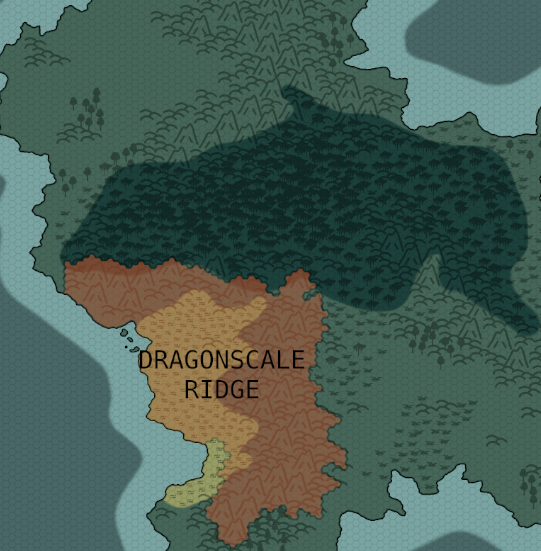
The dragonborn are among the oldest beast kin in the world. Their homeland lies along the Dragon Scale Mountains in the south-west, where they build vast stone terraces, stepped cities, mountain temples, and fortified monasteries.
For centuries, they believed their civilisation was eternal. Their laws came from the Four True Dragons, their rulers were chosen through sacred trials, and strength was considered the highest proof of authority. Then the Demon War shattered everything they believed.
The Dragon Scale Mountains
Dragonborn settlements climb the mountains in great stone tiers. Farms, markets, and workshops occupy the lower terraces, while temples and palaces stand above them. The land varies from volcanic valleys and dry plateaus to frozen peaks. Dragonborn farmers grow maize, beans, peppers, squash, fruit, and mountain tubers using ancient irrigation channels. Their cities are decorated with carved histories, astronomical symbols, painted stone, woven banners, feathers, and polished metal.
True Dragons
Unlike most cultures, the dragonborn do not traditionally worship Astra or the other gods. They worship four ancient dragons believed to possess real physical forms somewhere within the mountains.
The Sun-Crowned Dragon. The dragon of fire, courage, rulership, sacrifice, and victory. Its followers believe leaders must be the first to face danger and the last to seek comfort.
The Rain-Feathered Dragon. The dragon of water, fertility, healing, mercy, and change. Its followers teach that strength which cannot protect life is only destruction.
The Mountain-Rooted Dragon. The dragon of stone, endurance, law, memory, and tradition. Its followers preserve history and teach that a people without memory can be conquered without battle.
The Night-Coiled Dragon. The dragon of stars, prophecy, death, wisdom, and hidden knowledge. Its followers once predicted the ending of the world. Their failure during the Demon War has left the faith deeply divided.
The Strongest Voice
Traditional dragonborn society believes that endless debate is a sign of weakness. When disagreement cannot be resolved, those involved compete for the right to decide. This custom is known as the Law of the Strongest Voice.
Strength does not always mean physical power. A leader might be tested through combat, endurance, strategy, wisdom, memory, craftsmanship, or self-control. The victor speaks for the community, and the defeated are expected to obey. In theory, this ensures that decisions are made by the person most capable of carrying their consequences. In practice, powerful rulers often shaped the trials to favour themselves.
The Demonic War
Dragonborn prophecy claimed the world would end when Jura fell. When the city was destroyed, the dragonborn did not prepare to resist. Many gathered in temples or waited for the final age to begin.
The world did not end. Instead, the demons invaded the Dragon Scale Mountains. The Voice of the Four challenged the leader of the demonic host and was defeated. According to the Law of the Strongest Voice, the demons had proven their right to rule, and so the Dominion submitted. Dragonborn armies fought alongside the demons, their fortresses were opened, and their smiths armed the invading forces. Some resisted or fled, but many were hunted by their own people.
Then the demons were defeated. The world survived because weaker nations cooperated, resisted, and refused to accept what seemed inevitable. The dragonborn had obeyed the strongest and nearly destroyed themselves.
Shattered Homeland
After the war, the dragonborn lands were largely abandoned by the victorious armies. The surviving dragonborn were left among ruined temples, empty terraces, and broken fortresses.
Today, the homeland is divided into rival tribes, temple cities, monasteries, military states, and isolated valleys. Conflict over land, water, religion, and leadership is common. The dragonborn know that their infighting prevents recovery, but their traditions provide few ways to settle disputes between equals.
Modern Beliefs
Dragonborn society is now divided between several broad philosophies.
The Unbroken Law. Traditionalists believe the old system remains sacred. They argue that corrupt rulers failed the law, not that the law itself was wrong. Many hope to restore the Fourfold Dominion beneath a new Voice.
The Renewed Scale. Reformers believe strength should be judged by what it protects. They support councils, limited leadership, public accountability, and trials that test wisdom and compassion as well as power.
The Open Path. The Open Path believes the dragonborn must learn from the wider world. Its followers travel, study foreign cultures, join organisations such as the Heroes Guild, and question traditions once treated as unquestionable.
Clans and Honour
Dragonborn society is organised into large hearth-clans made up of families, adopted members, apprentices, and sworn companions. Each clan maintains a sacred fire or brazier. Important oaths are spoken before it, and exile is described as being cast from its warmth.
Dragonborn honour is based upon responsibility. Boasting is accepted, but every boast creates an obligation. Failure is less shameful than refusing to accept blame. The worst leaders are described as having an empty voice: they demand obedience but refuse the burden that comes with authority.
Monasteries
Mountain monasteries teach meditation, endurance, combat, history, astronomy, and self-control. Dragonborn meditation focuses on separating desire from duty. Before making an important decision, a dragonborn may withdraw until they can explain what they want, what they fear, and what responsibility demands. Drawing a weapon within a recognised monastery is considered proof that a person lacks control over themselves.
Dragonborn Beyond the Mountains
Before the Demon War, few dragonborn travelled beyond their homeland. Today, many live abroad as soldiers, scholars, merchants, exiles, pilgrims, or adventurers. Some left out of shame. Others seek knowledge, allies, or proof that the True Dragons still live. Many want to understand how the wider world survived when their own civilisation surrendered.
The Heroes Guild is particularly attractive to younger dragonborn. It represents many peoples cooperating without being forced beneath a single ruler.